Accelerated Dental Assistant Programs in Asheville: What to Know Before You Enroll
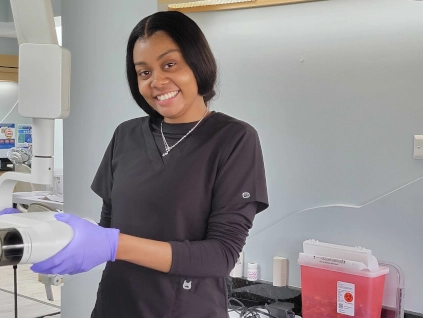
A year or more of school isn’t the only path into dental assisting. Accelerated dental assistant programs compress the essential training into a shorter timeline — weeks or months instead of semesters — so you can start your career sooner without skipping the skills that actually matter.
But “fast” and “good” aren’t always the same thing. Here’s how to evaluate accelerated programs in Asheville and make sure you’re getting real training, not just a quick certificate.
What makes a dental assistant program “accelerated”?
An accelerated program covers the same core competencies as a longer program but in a condensed format. It does this by:
- Eliminating filler — no general education courses that don’t relate to dental assisting
- Increasing weekly contact hours — more instruction and practice per week
- Integrating hands-on training throughout — clinical practice is part of the program from early on, not saved for the last few weeks
- Focusing on job-essential skills — every module connects directly to what you’ll do in a dental office
What a strong accelerated program should include
Speed is only valuable if the training is still thorough. Look for programs that cover:
Clinical skills:
- Chairside assisting during exams, fillings, extractions, and other procedures
- Dental X-ray techniques — exposure, processing, and safety
- Instrument sterilization and infection control
- Dental materials preparation (impressions, cements, composites)
- Patient positioning and comfort management
Administrative skills:
- Patient intake and scheduling
- Dental terminology and charting
- Records management and front-office workflow
- Insurance basics and billing fundamentals
Professional skills:
- Patient communication — especially with anxious patients
- Workplace professionalism and teamwork
- OSHA and HIPAA compliance
Who accelerated programs are designed for
Accelerated programs tend to work best for:
- Career changers — people who want to move into healthcare without spending a year+ in school
- Working adults — students who need to keep earning while they train
- Parents and caregivers — people with family responsibilities who need a realistic timeline
- Motivated learners — students who thrive in focused, intensive environments
- Complete beginners — no prior healthcare experience needed
Red flags to watch for
Not all accelerated programs are created equal. Be cautious if you see:
- No hands-on training — clinical skills can’t be learned from a screen
- No certification or exam prep — a program without a credential pathway limits your competitiveness
- Hidden costs — some schools advertise low tuition but add fees for materials, exams, or uniforms
- No career support — graduating fast only helps if you can find a job quickly too
- Unrealistic promises — any program that guarantees a job or an unrealistically high salary is being misleading
How to compare accelerated programs
When evaluating options, ask these questions:
- Does the program include supervised, hands-on clinical practice?
- How many weeks or months is the program?
- What is the total cost — including all fees?
- Are flexible payment plans available?
- Does the program prepare me for a certification or registration exam?
- What kind of career support do you offer after graduation?
- Can I talk to a current student or recent graduate?
See how our program answers these: Program details.
Get started at Asheville Dental Assistant School
- Explore the program: Program details
- Review tuition and payment options: Tuition
- Talk to our team: Contact
- Apply: How to apply
You're 12 weeks from the dental assistant career you deserve.